
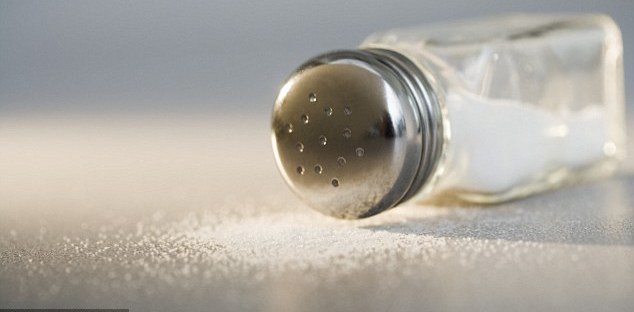
No, this is not a post about food (though I do have a food blog…), it’s still an English-language lesson.
But let me approach it by first giving my personal observations about the world we live in today. The Internet has opened the floodgate for torrents of news, articles, videos, etc. from around world, all accessible 24/7 from our gadgets. It’s both good news and bad news. The good news is that information is now shared quite freely. The bad news is that information is now shared quite freely.
You read the last two sentences correctly. They’re two sides of the same coin. (yes, that’s also an idiom, but not the one I want to discuss here).
Along with the good (accurate, legitimate, fair, etc.), a lot of trash (misinformation, inaccuracies, extreme biases, outright deception/hoax, etc.) is also mixed in.
This informational deluge and the effortless ‘sharing’ process over social media (as easy as clicking a button) have caused most people to not think about or digest the content of what they’re reading and propagating. We tend to forget that the final filter for this barrage of news is ourselves. Technology shouldn’t negate critical thinking on our part!
So, over the years I have learned to take many news items, especially ones shared on social media, with a grain of salt.
The idiom ‘to take (it/something) with a grain of salt’ means to accept news or information with a degree of healthy skepticism, because it might be exaggerated or mixed with some misinformation. It’s not the same as being suspicious all the time.
There are a couple of theories on the origin of this idiom. The first is that most food is made more palatable with the addition of salt. The second stems from ancient Roman literature that suggested salt to be an antidote, or at least reduced the effects, of poison.
So next time a viral news story starts popping up on your timeline or chat groups, take it with a grain of salt, because if you don’t learn to do this, you might as well be drinking the Kool Aid!
 Tessa Mohede